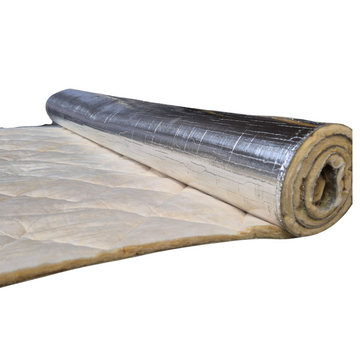
dB Acoustic Lag 50

Secure payments
Product Information


dB Acoustic Lag 50 – Acoustic Pipe Lagging
dB Acoustic Lag 50 is a flexible, foil-faced acoustic lagging designed to reduce noise transmission through pipework, ductwork, lightweight panels and mechanical services.
Its multi-layer construction combines a dense 5kg/m² acoustic barrier with an integrated fibreglass quilt and Class 0 aluminium foil facing. This provides effective acoustic insulation in a lighter and easier-to-handle format than heavier acoustic lagging products.
dB Acoustic Lag 50 is suitable for residential, commercial and industrial applications where reliable noise control is required without adding excessive weight to the treated surface.
Key Benefits
- Effective noise reduction: helps reduce airborne noise passing through pipework, ductwork, enclosures and lightweight panels.
- Lightweight construction: a nominal finished weight of 5.54kg/m² makes it easier to lift, cut and install than heavier acoustic lagging systems.
- Multi-layer performance: combines a dense acoustic barrier, fibreglass quilt and protective foil facing.
- Flexible and easy to form: can be wrapped around pipes, ductwork, bends, junctions and irregular mechanical services.
- Class 0 foil facing: the aluminium foil facing is classified to BS 476 Parts 6 and 7.
- Acoustic and thermal benefits: the fibreglass quilt contributes additional sound absorption and thermal insulation.
- Wide operating temperature range: suitable for static operating temperatures between -20°C and 93°C, subject to short exposure at the extremes.
- Suitable for varied environments: appropriate for residential, commercial and industrial noise-control applications.
Applications
dB Acoustic Lag 50 can be used to improve the acoustic performance of:
- Soil pipes and waste pipes
- Rainwater pipes and internal drainage systems
- HVAC ductwork and ventilation systems
- Mechanical and electrical service pipework
- Lightweight metal, timber and plastic panels
- Plant-room equipment and machinery housings
- Acoustic enclosures
- Commercial and industrial piping systems
- Residential apartments and multi-occupancy buildings
- Hotels, hospitals, schools and office developments
How dB Acoustic Lag 50 Works
dB Acoustic Lag 50 uses a combination of mass and absorption to control noise.
The dense 5kg/m² acoustic barrier adds mass to the pipe, duct or panel being treated. This helps resist airborne sound transmission and reduces the amount of noise breaking out through lightweight surfaces.
The fibreglass quilt helps absorb sound energy and separates the acoustic barrier from the treated surface. This multi-layer construction provides more effective noise control than a lightweight foil or insulation quilt used independently.
For the best result, the material should be fitted closely around the treated surface. All joints, overlaps and exposed edges should be securely sealed with aluminium foil tape.
Construction
- Outer facing: Class 0 aluminium foil
- Acoustic layer: 5kg/m² flexible acoustic barrier
- Absorption layer: fibreglass quilt
- Finished nominal weight: 5.54kg/m²
- Finished nominal thickness: 15.25mm
Technical Specification
| Property | Performance | Unit | Tolerance | Test method |
|---|---|---|---|---|
| Apparent density | 363 | kg/m³ | ±10% | DIN EN 1602 |
| Reaction to fire | Class 0 | — | — | BS 476 Parts 6 and 7 |
| Nominal weight | 5.54 | kg/m² | ±10% | — |
| Nominal thickness | 15.25 | mm | ±20% | — |
| Static operating temperature | -20 to 93 | °C | Short exposure at extremes | Internal |
| Colour | Silver/yellow | Front/back | — | — |
Acoustic and Thermal Performance
dB Acoustic Lag 50 achieves an average Sound Reduction Index of approximately 38dB. Actual performance will depend on the surface being treated, the frequency of the noise, the installation quality and the overall construction.
The fibreglass quilt also provides thermal insulation, with a stated thermal conductivity of approximately 0.033W/mK at 0°C.
Published laboratory figures should not be interpreted as a guaranteed reduction in noise levels once installed. Site performance can be affected by joints, gaps, penetrations, flanking paths and the surrounding construction.
Installation Guide
- Measure the surface: calculate the circumference and length of the pipe or ductwork, allowing additional material for joints, bends, fittings and overlaps.
- Prepare the area: ensure the surface is clean, dry and free from sharp protrusions that could damage the acoustic lagging.
- Cut the lagging: cut dB Acoustic Lag 50 to the required size using a suitable sharp knife and straight edge.
- Wrap the surface: position the quilted side towards the pipe, duct or panel, leaving the aluminium foil facing visible externally.
- Fit closely: form the material tightly around the treated surface without unnecessarily compressing the quilt.
- Secure the material: use suitable mechanical bands or zip ties (avoid fixings unless absolutely necessary where required to prevent movement).
- Seal the joints: close all seams, overlaps and exposed edges using self-adhesive aluminium foil tape.
- Treat fittings carefully: cut and shape separate pieces around bends, branches and junctions to maintain full acoustic coverage.
- Inspect the installation: check that there are no exposed gaps or untreated sections through which noise could escape.
Where a project requires a stated acoustic, thermal or fire performance, installation should follow the relevant project specification and manufacturer guidance.
Why Choose dB Acoustic Lag 50?
dB Acoustic Lag 50 provides a practical balance between acoustic performance, weight and installation convenience.
Its lighter construction makes it particularly suitable where a 10kg/m² acoustic barrier would be unnecessarily heavy or difficult to install. It is ideal for projects requiring effective pipe or duct noise control while keeping the finished system manageable.
For applications requiring greater acoustic mass and higher overall sound insulation, consider upgrading to dB Acoustic Lag 100.
Recommended Accessory
Seal joints, overlaps and exposed foil edges to complete the installation.

Aluminium Foil Tape – 75mm x 45m
Self-adhesive aluminium foil tape for sealing joints, overlaps and exposed edges when installing dB Acoustic Lag 50.
View Foil TapeFrequently Asked Questions