Absorption Panels
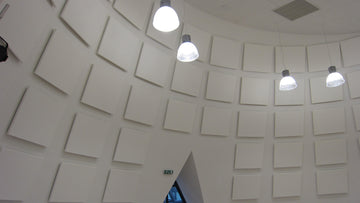
Restaurant and Cafe Acoustic Absorption
Restaurants may require a more decorative solution when installing acoustic wall and ceiling panels. We have a range of bespoke solutions that will complement any bar or restaurant.
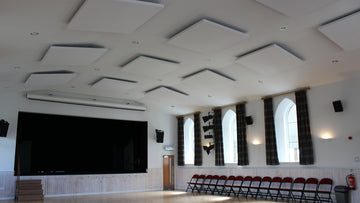
Village and Community Hall Absorption
Community halls can easily reduce reverberation and echo that contribute to noise levels in open spaces. To control this, the hall can install acoustic panels as part of their sound control policy.
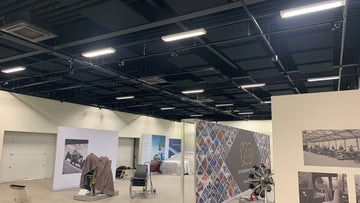
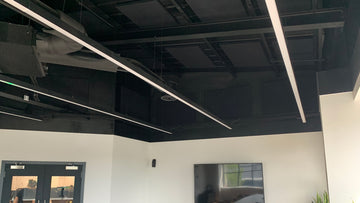
Office and Meeting Room Absorption
Our team can test, supply and install a number of decorative acoustic wall and ceiling panels to help reduce noise in open office environments. We also have solutions for small and home offices too.
Education Absorption
We can advise on a number of solutions to help reduce noise in classrooms, school halls and break-out areas. Including pre-testing, installation and aftercare.
Do You Have a Reverberation Issue?
Speak to our team and find the right acoustic solution for your space.
University of Liverpool Absorption Treatment Case Study
Acoustic Absorption - Understanding the basics
Acoustic Absorption
Why is my room echoing so much?
Rooms echo because sound reflects off hard surfaces like glass, concrete, plaster, and tiles. These reflections bounce around the space instead of being absorbed, creating reverberation and poor sound clarity. Large, empty or minimally furnished rooms are especially prone to echo issues.
How do I reduce echo in a room effectively?
The most effective way to reduce echo is to add sound-absorbing materials such as acoustic panels, ceiling rafts, baffles and other soft furnishings.
These materials absorb reflected sound energy, reducing reverberation time and improving speech clarity.
Do acoustic panels actually work?
Yes. Acoustic panels are highly effective when correctly specified and installed.
They reduce:
- Echo
- Reverberation
- Noise build-up
This results in clearer speech, improved comfort, and better acoustic balance in a room.
What is the difference between acoustic panels and soundproofing?
This is a key point of confusion:
- Acoustic panels = reduce echo inside a room
- Soundproofing = block sound between rooms
Acoustic panels do not stop noise passing through walls — they improve how a space sounds internally.
How many acoustic panels do I need?
This depends on room size and surface materials, but a strong professional guideline is:
Around 30% ceiling coverage for effective echo control
Typical guidance:
- Small room: 4–8 panels
- Medium room: 8–16 panels
- Large/open space: 16+ panels
We strongly urge you use our calculation tool, or, contact our technical team to organize a site visit.
Higher coverage may be needed for high ceilings or very reflective environments.
Where should acoustic panels be installed for best results?
Best results come from treating key reflection areas:
- Ceilings (highest priority in most spaces)
- Large blank wall surfaces
- Reflection paths between speakers and listeners
Ceiling treatment is often the most effective starting point in commercial spaces.
What are acoustic panels made from?
High-performance acoustic panels are typically made from:
- Recycled polyester fibre (PET)
- High Performance Melamine Foam
- Fabric or smooth finishes
- Natural Wood and Fleece in professional systems from Troldtekt (Priced on application)
These materials are designed to absorb sound efficiently without shedding or degrading.
Are acoustic panels suitable for large or open spaces?
Yes — they are specifically designed for large echo-prone environments such as:
- Offices
- Restaurants
- Schools
- Sports halls
- Swimming pools
Large open spaces benefit most from ceiling-based acoustic treatment.
Do acoustic panels improve speech clarity?
Yes. By reducing reflected sound, acoustic panels significantly improve speech intelligibility.
This is especially important in:
- Meeting rooms
- Classrooms
- Restaurants
- Public buildings
Save the headache, reduce that echo!
What is the best type of acoustic treatment for large spaces?
For large spaces, the most effective solutions are:
- Ceiling rafts
- Suspended baffles
- High-coverage wall systems
Professional installers (such as those using Sonata-style systems) typically prioritise ceiling absorption first for maximum impact.
Can acoustic panels be installed on walls and ceilings?
Yes. Acoustic panels are designed for both applications:
- Wall-mounted panels (brackets or adhesive)
- Ceiling-mounted panels (suspended systems)
- Direct fix installations
Ceiling systems are usually more effective for controlling reverberation.
Are suspended acoustic panels more effective?
Yes. Suspended panels often perform better because:
- They expose both sides to sound
- They allow air gaps for improved absorption
- They improve low-frequency performance
This is why they are widely used in commercial acoustic design.
Do acoustic panels help with low-frequency noise?
Yes — especially when suspended and paired with Bass Traps.
They improve:
- Bass control
- Speech clarity
- Overall room balance
Are acoustic panels fire rated?
Yes. Most commercial acoustic panels are tested to UK fire safety standards such as:
- BS476 Part 6 & Part 7
- Class 0 / Class 1 surface spread of flame ratings (depending on product)
This makes them suitable for schools and public buildings.
For specific data on fire testing please consult the products datasheet or email the technical team.
Are acoustic panels safe and non-toxic?
High-quality acoustic panels are typically:
- Low VOC
- Non-toxic
- Non-irritant
- Safe for indoor environments
Are acoustic panels environmentally friendly?
Many modern acoustic panels are made from natural and recycled materials which are again recyclable.
They are:
- Sustainable
- Long-lasting
- Low environmental impact
- Low carbon footprint
- Light to transport
Are acoustic panels suitable for humid environments like swimming pools?
Yes — certain polyester fibre acoustic systems are suitable for humid or chlorine-rich environments.
They typically:
- Do not absorb moisture
- Do not support mould growth
- Remain stable in high humidity
How are acoustic panels installed?
Common installation methods include:
- Spray adhesive (direct wall fix)
- Mechanical brackets
- Suspension cable systems
Most systems are designed for quick and clean installation.
Do acoustic panels improve classroom and office performance?
Yes. Acoustic treatment improves:
- Speech clarity
- Concentration
- Learning and communication quality
This is why acoustic performance is a key requirement in education standards such as BB93.
How quickly do acoustic panels make a difference?
The effect is immediate once installed.
Users typically notice:
- Reduced echo instantly
- Clearer speech
- Lower perceived noise levels
Can acoustic panels be removed or repositioned?
Yes, depending on installation type:
- Adhesive = semi-permanent
- Mechanical fixings = removable
- Suspended systems = adjustable
What is the lifespan of acoustic panels?
Acoustic panels are designed for long-term performance.
They are:
- Dimensionally stable
- Durable
- Low maintenance
- Long-lasting in commercial environments
Do acoustic panels completely remove noise?
No. Acoustic panels do not block external noise.
They improve internal sound quality by reducing echo and reverberation.
What maintenance do acoustic panels require?
Maintenance is minimal:
- Light vacuum cleaning
- Occasional dust removal
- Spot cleaning if needed
What is reverberation (reverb)
Reverberation is the persistence of sound in a space after the original sound is made. It’s made up of multiple reflections bouncing around the room.
In simple terms:
- Echo = a distinct repeat of sound
- Reverb = a blended “wash” of lingering sound
They are related, but not the same. Reverberation is what most indoor acoustic problems actually refer to.
